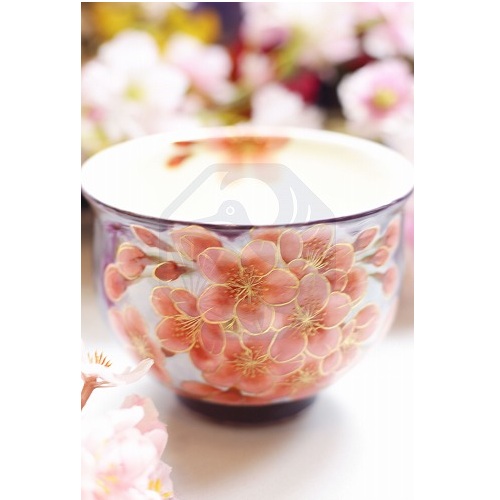
Japan has a rich pottery culture, with each region offering its own unique style.
The clay, history, and craftsmanship of each area give these pieces their individual character and beauty.
These vessels not only serve a practical purpose, but also bring elegance to everyday life.
Here are four representative styles of Japanese pottery.
Kiyomizu Ware (Kyoto)
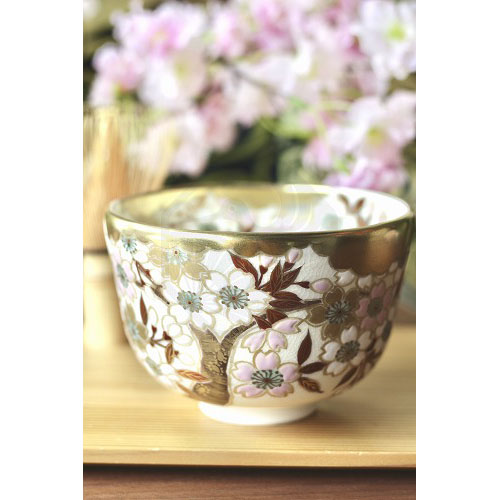
Kiyomizu ware developed around Gojozaka and Kiyomizu Temple in Kyoto, and is also known as Kyo ware.
It was established in the 16th century and grew alongside tea culture from the Momoyama period through the Edo period.
Its greatest charm lies in its delicate and graceful decoration.
Many pieces feature colorful overglaze painting, gold detailing, and other refined hand-painted designs created by skilled artisans.
Another unique feature of Kiyomizu ware is its freedom of expression.
It is not limited to one specific clay or technique, which allows for a wide variety of artistic styles.
For this reason, it is often appreciated as highly artistic pottery.
Mino Ware (Gifu)
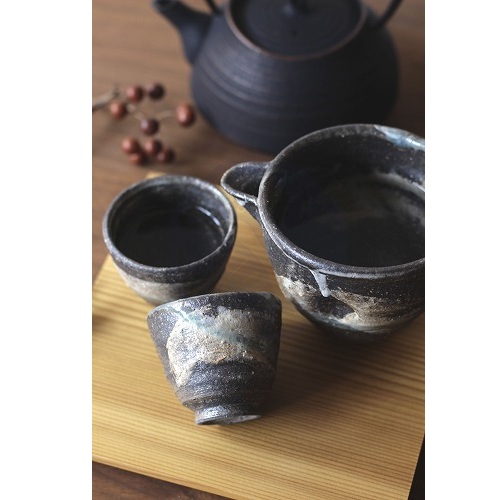
Mino ware comes from the Tono region of Gifu Prefecture and is the most widely produced pottery in Japan.
It developed greatly in the 16th century along with the growing popularity of the tea ceremony.
One of its main characteristics is its wide variety of styles, especially in the use of glazes and firing methods.
From rustic and warm textures to modern and simple designs, Mino ware offers a broad range of expressions.
Because of this versatility, it has long been loved as pottery for everyday use.
Kutani Ware (Ishikawa / Kanazawa)
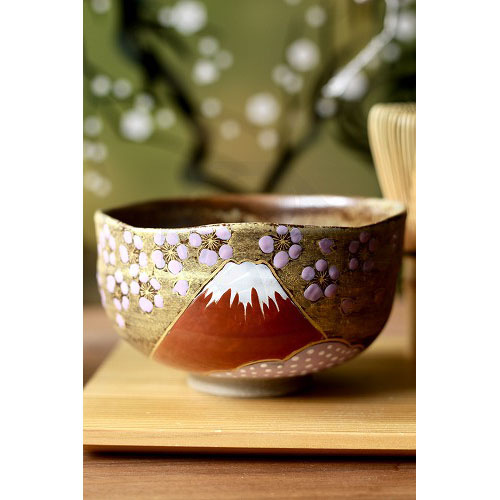
Kutani ware began in the 17th century in the Kaga domain, which is now part of Ishikawa Prefecture.
Although production was once discontinued, it was revived in the late Edo period and continues to this day.
Its most striking feature is its bold and colorful decoration using five traditional colors: red, green, yellow, purple, and dark blue.
These vivid designs give Kutani ware a strong presence and rich decorative appeal that easily captures the eye.
Arita Ware (Saga)
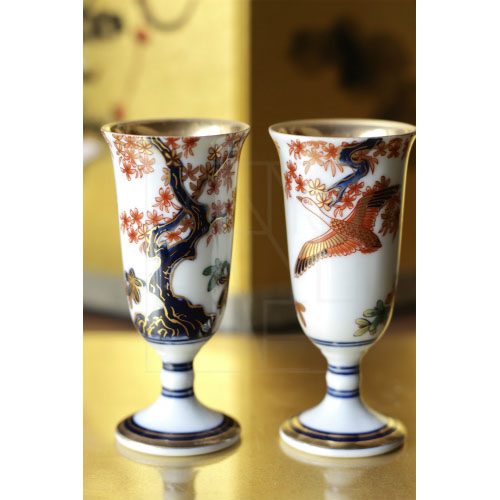
Arita ware is the first porcelain produced in Japan, dating back to the early 17th century.
It was created in Arita, Saga Prefecture, and was also exported overseas under the name Imari ware.
It is known for its smooth white porcelain surface, often decorated with blue underglaze painting or colorful designs.
Its refined and elegant beauty has made it one of Japan’s most beloved styles of porcelain.
At our shop, you can find handcrafted teaware such as matcha bowls and teapots from these regions.
TSURU-IPPUKU is just a 10-minute taxi ride from Kyoto Station and is also close to Nijo Castle, a UNESCO World Heritage Site.
We hope you will stop by and visit us.